
How it works
From a partner's GVP classification to a visible impact on the planet — in simple, transparent steps.
The partner obtains a GVP classification
A tourism business — hotel, guesthouse, restaurant, agency or other tourism business — creates an account and fills in data on energy, water, waste and its sustainable practices.
You receive the GVP score and the measures sheet
Based on the data, the platform calculates a sustainability score (EcoScore) and generates a measures sheet with a QR code, which the partner can display at reception, on the website or in the menu.
Customers contribute for sustainability
At checkout, the customer can add a sustainability contribution (optional) on top of the purchase value — by scanning the QR code on the partner's measures sheet or directly online. The partner collects it, and the contribution is recorded transparently.
Impact becomes visible
Contributions fund the partner's sustainability practices and the running of the platform, and feed an international prize draw — all tracked transparently. Separately, S.C. ASISARTAS S.R.L. sponsors environmental organisations for tree planting.
The carbon footprint
Our impact on the planet — and why every sustainability contribution matters.
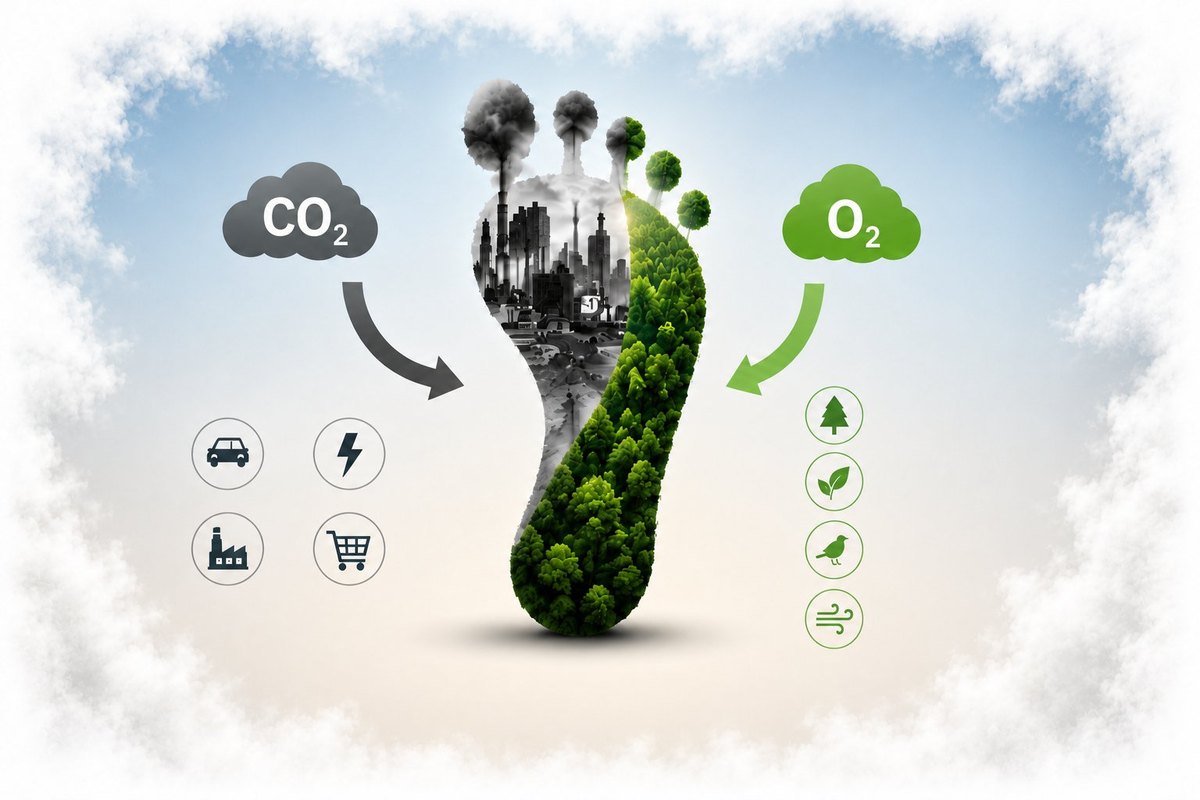
Our impact on the planet
Human activities release CO₂ into the atmosphere, while forests and plants absorb it, store the carbon and release oxygen. The balance between the two decides the health of the planet.
The carbon footprint in figures
Indicative estimates, tonnes of CO₂ per year — every action counts.
How we can reduce the carbon footprint
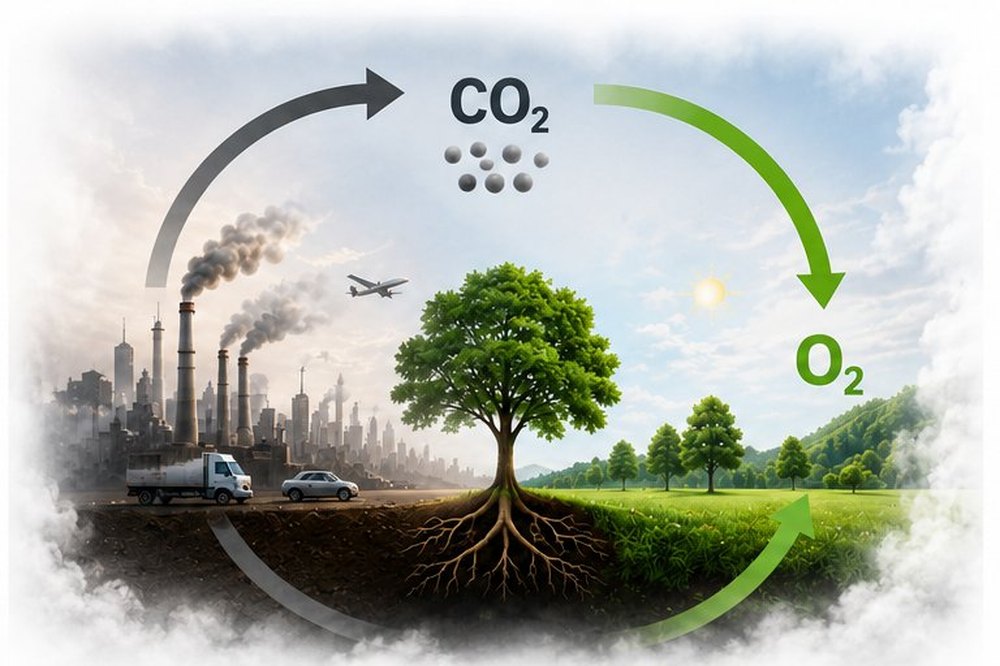
The CO₂ – O₂ flow
Plants absorb CO₂ through photosynthesis and store the carbon in wood, roots and soil, while releasing oxygen — the natural carbon cycle. We reduce emissions, protect nature and secure a sustainable future.
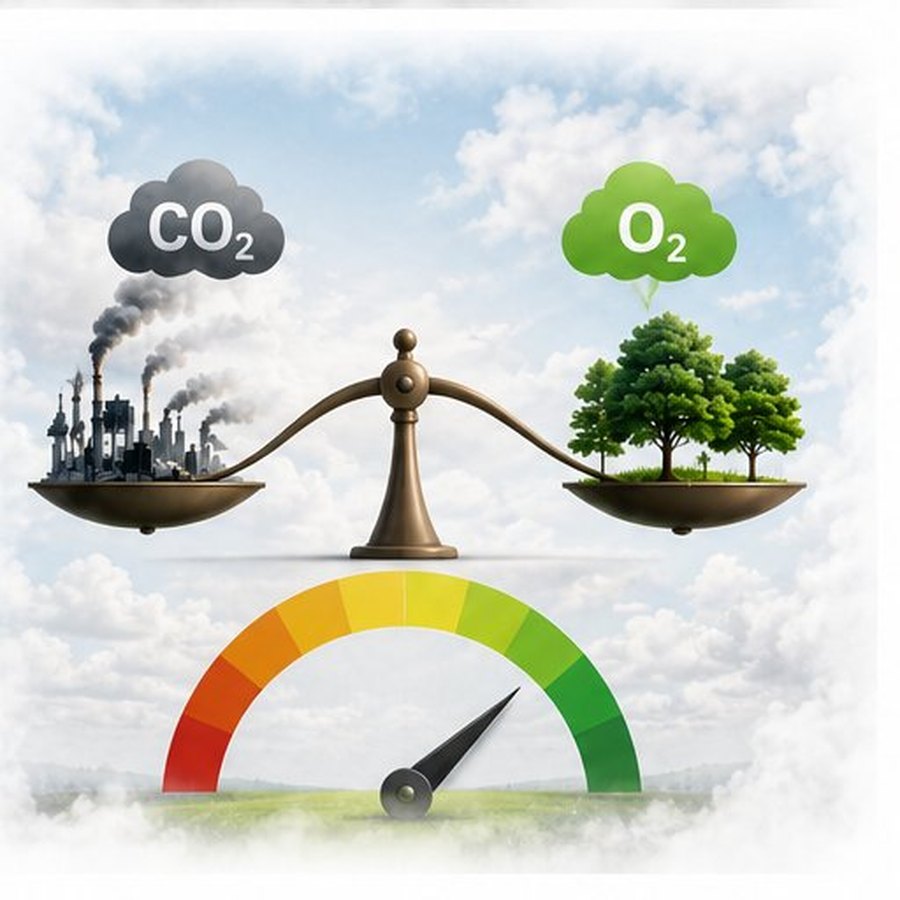
CO₂ vs O₂ — the balance of life
The balance between emissions and absorption sustains life. Let us reduce CO₂ and increase O₂ for a healthy planet and a sustainable future.
What is the carbon footprint?
The carbon footprint is the total amount of greenhouse gases emitted directly or indirectly by a person, company, product or activity — expressed in CO₂ equivalent (tCO₂e).
Activities
Energy, transport, industrial processes, products, travel.
Emissions
Activities release CO₂, CH₄, N₂O and fluorinated gases.
Calculation
Emissions are converted into tonnes of CO₂ equivalent (tCO₂e).
Assessment & action
The result guides the consumption reduction measures.
Common emission sources
Transport
Cars, trucks, planes, ships
Energy
Coal, oil, natural gas
Industry
Cement, steel, chemicals
Agriculture
Livestock, fertilisers
Waste
Landfills, incineration
How we can reduce the footprint
Energy efficiency
- •LED lighting
- •Efficient appliances
- •Building insulation
Can cut emissions by 20–40%.
Renewable energy
- •Solar panels
- •Wind turbines
- •Green energy
Low or near-zero emissions.
Sustainable transport
- •Bicycle
- •Public transport
- •Electric vehicles
EVs cut emissions by over 50%.
Waste reduction
- •Reduce
- •Reuse
- •Recycle
Fewer resources, less pollution.
Ecosystem restoration
- •Tree planting
- •Certified green projects
A mature tree absorbs ~20–25 kg CO₂/year.
The emission reduction hierarchy
The greatest impact comes from avoiding unnecessary emissions. Ecosystem restoration complements the reduction measures — supporting nature beyond what can be reduced directly.
- Avoid — prevent the emission from the start (e.g. online meetings instead of travel, digital documents, no single-use products)
- Reduce — use less and more efficiently (e.g. LED lighting, insulation, smart climate control)
- Replace — switch to low-emission alternatives (e.g. green energy, electric vehicles, sustainable suppliers)
- Contribute to restoration — support ecosystem restoration through tree planting and certified green projects
Measure, report, improve
Measure
You collect data on consumption and emissions.
Report
You calculate the footprint and share the results.
Set targets
You define clear goals (e.g. −20% by 2030).
Act
You implement measures and monitor progress.
Every tonne of CO₂ avoided counts. 🌍
A score that shows real impact
EcoScore assesses several dimensions — energy, water, waste, transport, food and education — and turns them into a clear, comparable and verifiable score. The more a business reduces, the higher the score climbs.
Ready to join the Green Vision Planet team?
Register your business and turn sustainability into a visible advantage.